

Why Some People Don’t Respond to Antidepressants: Understanding Advanced Treatment Options for Depression
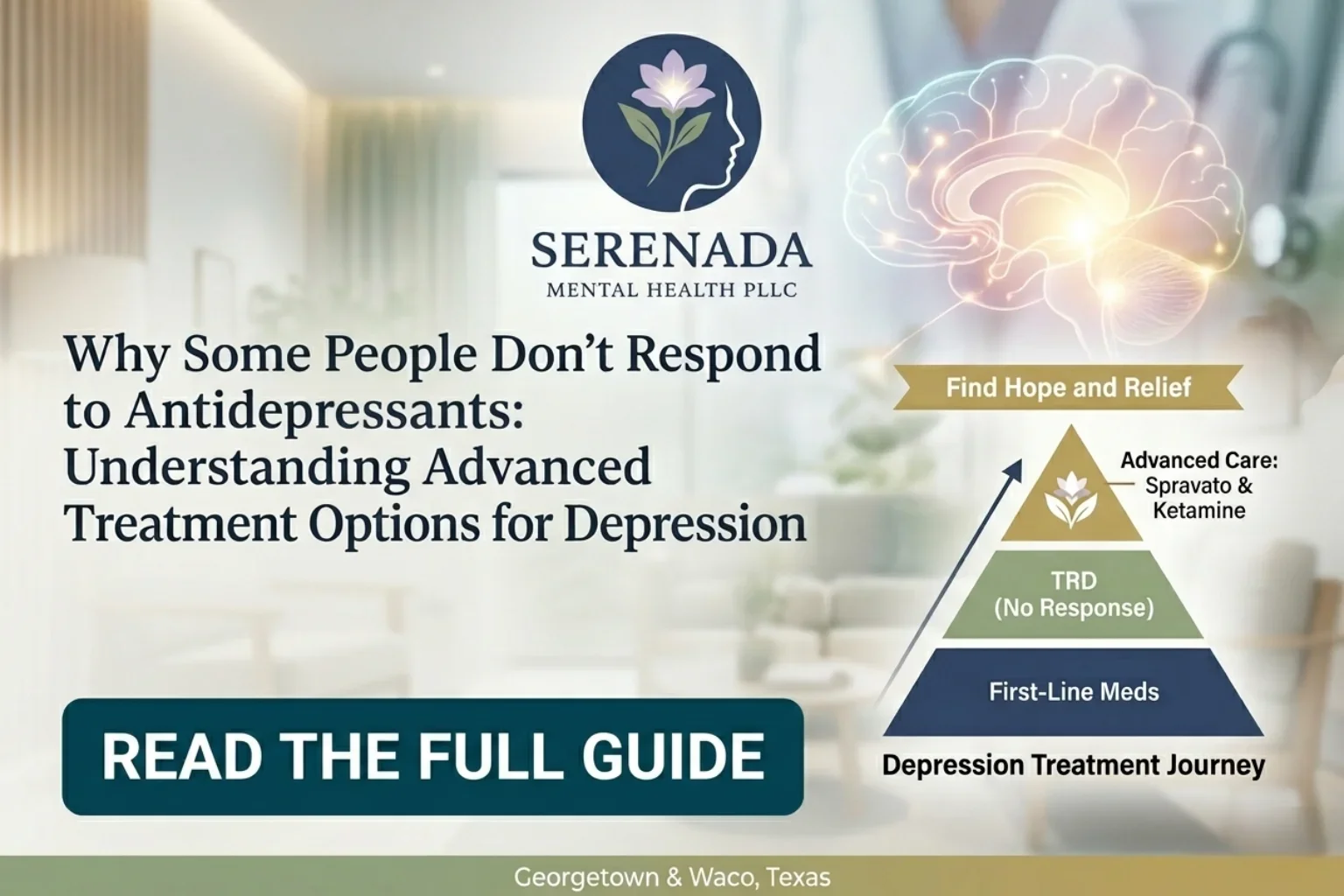
Understanding Advanced Treatment Options for Depression
Up to 30-50% of depression patients experience treatment-resistant depression (TRD), failing to respond to two or more antidepressants like SSRIs or SNRIs, yet advanced options like Spravato offer rapid relief. At Serenada Mental Health in Georgetown, Texas, personalized depression treatment plans address non-responsive to antidepressants cases for depression, anxiety, and PTSD patients seeking non-conventional treatment for depression. This guide explores antidepressant treatment failures, psychiatric medication nuances, and evidence-based depression treatment options for lasting recovery.
Why Antidepressants Fail: Science Behind Non-Response
Antidepressant medications such as SSRIs (e.g. Prozac, Zoloft) and SNRIs (e.g. Effexor, Cymbalta) boost serotonin and norepinephrine but miss glutamate pathways in many brains, leading to partial or no relief.
Key Biological Factors
Genetics and Metabolism: Variations in CYP enzymes slow drug breakdown; 40% show gene-based poor response.
Neurite Differences: Non-responders have longer serotonin neurites, disrupting signaling; seen in lab models.
Brain Circuitry: TRD links to inflammation, HPA axis issues; 17.7% late-life cases resist first-line drugs.
Nearly half of diagnoses qualify as TRD, with 13.9-19% of medicated patients affected. Side effects (weight gain, sexual dysfunction) compound frustration without symptom drops.
Actionable Tip: Track symptoms via PHQ-9 weekly; consult for genetic testing (e.g., GeneSight) before switching.
Defining Treatment-Resistant Depression (TRD)
TRD occurs when depression persists after adequate trials (6-8 weeks, therapeutic doses) of ≥2 antidepressants from different classes. It's not patient "resistance" but mismatched biology; prevalent in severe, recurrent cases.
Prevalence and Risk Factors
Stats: 30% major depression cases; up to 50% after multiple trials.
Comorbidities: Anxiety, PTSD raise risk 2x; cardiovascular issues correlate.
Demographics: Younger, non-Black patients are more prone.
Early ID prevents prolonged suffering; Serenada screens via history review.
Internal Link: Explore Depression Screening at Serenada.
Common Antidepressants and Their Limitations
SSRIs/SNRIs help 35-73% but falter in TRD due to delayed onset (4-6 weeks).
| Class | Examples | Response Rate | Common Failures |
|---|---|---|---|
| SSRIs | Sertraline, Fluoxetine | 50-60% | Sexual side effects, partial relief |
| SNRIs | Duloxetine, Venlafaxine | 55-65% | Withdrawal, no glutamate action |
| Others | Bupropion, Mirtazapine | 40-50% | Agitation in anxiety/PTSD |
Semantic Insight: Non-conventional treatment for depression targets gaps like glutamate.
Advanced Treatment Options for Depression
For non-responders to antidepressants, FDA-approved innovations shine. Serenada offers comprehensive plans.
1. Spravato (Esketamine Nasal Spray): Rapid TRD Relief
FDA-approved monotherapy for TRD; glutamate modulator acts in hours, not weeks.
Efficacy: 22.5% remission at 4 weeks vs. 7.6% placebo; superior to quetiapine (21.7% relapse-free).
Protocol: Clinic-administered, 2x/week initially; monitors dissociation.
Edge: Anti-suicidal effects in 24 hours.
Example: Patient post-SSRI failure: MADRS score drops from 35 to 12 in 4 weeks.
Actionable Tip: Pair with oral antidepressant; track via app post-dose.
External Reference: FDA Spravato Approval.
2. IV Ketamine Infusions: Breakthrough for Severe Cases
52% remission after 3 infusions; equals ECT efficacy with fewer side effects.
Mechanism: NMDA antagonist rewires synapses rapidly.
For Whom: TRD, PTSD, suicidal ideation.
Duration: 40-100 min sessions; boosters quarterly.
Serenada Mental Health specializes for anxiety/PTSD comorbidity.
3. Transcranial Magnetic Stimulation (TMS)
Non-Invasive Magnet Therapy, 40-50% response rate, 25-35% remission; durable 6-12 months.
How: Daily 4-6 week sessions stimulate the prefrontal cortex.
Pros: No anesthesia; outpatient.
Internal Link: TMS Therapy at Serenada Mental Health.
4. Comprehensive Medication Management
Personalized plans review history, labs, and comorbidities.
Augmentation: Add atypical antipsychotics (aripiprazole), thyroid replacement.
Monitoring: Quarterly adjustments.
Actionable Tip: Maintain a mood journal; report sides immediately.
| Therapy | Onset | Response Rate | Best For |
|---|---|---|---|
| Spravato | 24hrs | 22-52% | TRD, suicidal |
| Ketamine IV | Hours | 52-67% | Severe/PTSD |
| TMS | 4-6wks | 40-50% | Non-invasive TRD |
| ECT (Gold Std) | Days | 70-90% | Catatonic |
Integrating Therapy & Lifestyle into Depression Treatment Plan
Psychiatric medication pairs with CBT and exercise for 20% better outcomes.
Therapy: IPT for interpersonal depression.
Lifestyle: 30min walks, omega-3s boost SSRIs 25%.
For PTSD/Anxiety: EMDR + medicines.
Serenada Mental Health's holistic approach.
External Reference: APA Depression Guidelines.
Actionable Tips for Patients and Providers
Patients: Log symptoms/doses; seek second opinions early.
Providers: Baseline labs; trial 8 weeks min; escalate to advanced.
Red Flags: Suicidality—rush to ketamine/Spravato.
Texas Access: Verify insurance for Spravato/TMS.
Internal Link: Schedule Consultation.
Hope for Non-Responsive Cases: Real Patient Stories
TRD is not terminal; 52% of ketamine remitters maintain gains 6 months after treatment. Serenada patient: "Post-Spravato, first relief in years".
Conclusion
Non-response to antidepressants affects 30-50%, but advanced treatment options for depression like Spravato, ketamine and TMS deliver rapid, evidence-based relief for treatment-resistant depression. Do not restart; advance with a customized plan at Serenada Mental Health.
Ready for lasting relief from depression, anxiety, or PTSD? Contact Serenada Mental Health in Georgetown, TX, for your personalized depression treatment plan today. Book Free Consultation – Hope starts now
Frequently Asked Questions (FAQs)
What if SSRIs fail?
30% face TRD; try Spravato (24hr onset).
TRD definition?
No response to 2+ antidepressants.
Ketamine vs. TMS?
Ketamine is faster (cure in hours), TMS is durable (long-term results).
Spravato sides?
Mild dissociation; clinic-monitored.
Texas options?
Serenada offers all advanced therapies.
Tabitha Ross: APRN -CNP, PMHNP