

Spravato Treatment for PTSD and Depression:New Hope for Waco,TX Patients
When Nothing Else Works: The Spravato Breakthrough
If you have tried antidepressant after antidepressant and still feel like you are stuck in the same dark place, you are far from alone. Roughly one in three people with depression does not respond to standard treatments like SSRIs or SNRIs. For those living with both treatment-resistant depression (TRD) and post-traumatic stress disorder (PTSD), the road to recovery can feel especially long and frustrating. That is exactly why Spravato (esketamine) has generated so much excitement in the mental health community, and why patients in Waco, Texas, are paying close attention.
Spravato is an FDA-approved nasal spray that works through the brain's glutamate system rather than the serotonin pathways targeted by most antidepressants. First approved in March 2019 for TRD as an add-on therapy, it made headlines again in January 2025 when the FDA cleared it as the first and only standalone treatment, or monotherapy, for adults with treatment-resistant depression. That change means patients no longer need to take an oral antidepressant alongside it. In this article, we will walk through how Spravato works, what the clinical data actually shows, where PTSD fits into the picture, and what Waco-area patients need to know about getting started.
Understanding Treatment-Resistant Depression and PTSD
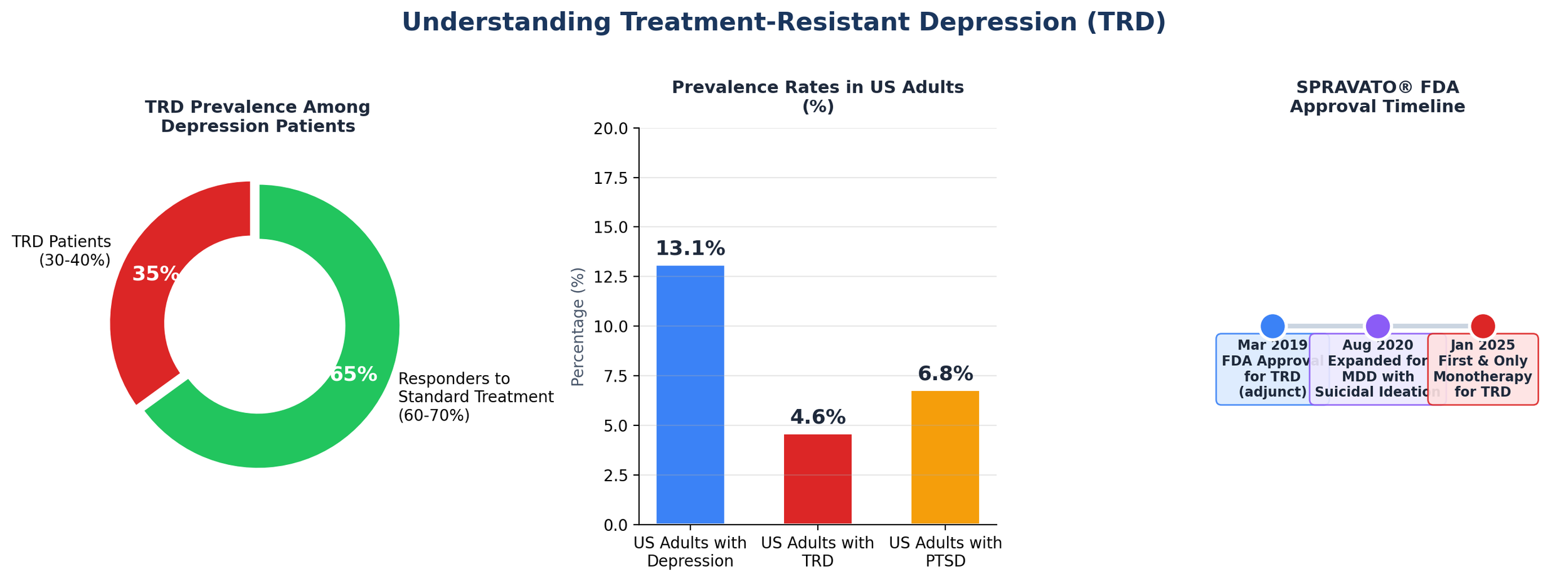
Treatment-resistant depression simply means your depression has not improved after trying at least two different antidepressants at the right dose for a long enough period. It is more common than most people realize. Research published by the National Institutes of Health puts the number at 30 to 40 percent of all depression patients. The CDC found that 13.1 percent of Americans age 12 and older experienced depression between 2021 and 2023, so that means millions are living with a form of depression that standard medications simply cannot fix. Johns Hopkins Medicine reports that up to 33 percent of people with depression do not respond to multiple conventional antidepressants.
PTSD adds another layer of complexity. The National Center for PTSD estimates that about 6.8 percent of U.S. adults will deal with PTSD at some point, and the numbers climb much higher among veterans and first responders. Texas has the second-largest veteran population in the country, and the Waco-McLennan County area is home to a significant number of them. Local programs like the McLennan County Veterans Treatment Court and the Warriors Research Institute at Baylor University were created specifically because of the strong link between untreated PTSD and broader life crises in this community. Research also shows that up to 50 percent of people with PTSD also meet the criteria for major depressive disorder, which makes treating both conditions at the same time especially important.
TRD Prevalence: 30-40% of depression patients do not respond to standard treatments
US Depression Rate: 13.1% of Americans aged 12+ (CDC 2021-2023)
PTSD-Depression Overlap: Up to 50% of PTSD patients also have MDD
Texas Veterans: 2nd largest veteran population in the U.S.
How Spravato Works: A Different Path in the Brain
Most antidepressants target serotonin, norepinephrine, or dopamine. Spravato does something completely different. It contains esketamine, which is derived from ketamine, an anesthetic that has been used in hospitals since the 1960s. Esketamine blocks the NMDA receptor in the brain, which is part of the glutamate system, the most abundant excitatory neurotransmitter system we have. When that receptor is blocked, the brain responds by rapidly increasing a protein called brain-derived neurotrophic factor, or BDNF. BDNF helps grow new synaptic connections in areas of the brain that actually shrink during chronic depression, like the prefrontal cortex and hippocampus. That is likely why Spravato can start working within hours rather than the weeks most oral antidepressants need. It is essentially helping the brain repair itself at a structural level, which is a fundamentally different approach from simply tweaking neurotransmitter levels.
For PTSD patients, the glutamate system matters for another reason: it plays a central role in how memories are formed and re-stored. Early research suggests that esketamine may weaken the intensity of intrusive traumatic memories by disrupting a process called memory reconsolidation. While this is still being studied, the early results are promising enough that many psychiatrists are already considering Spravato for patients with both TRD and PTSD.
FDA Approvals: From Add-On Therapy to Standalone Treatment
Spravato's FDA journey has moved fast, and each step has opened doors for more patients. In March 2019, the FDA approved it as an adjunct therapy for TRD, meaning it had to be paired with an oral antidepressant. That approval was based on five Phase 3 trials involving more than 1,700 patients and was granted Breakthrough Therapy designation. Then in August 2020, the FDA expanded the indication to cover adults with major depressive disorder and acute suicidal ideation or behavior. This was a big deal because traditional antidepressants take weeks to kick in, while Spravato can reduce symptoms within 24 hours, which matters enormously when someone is in crisis.
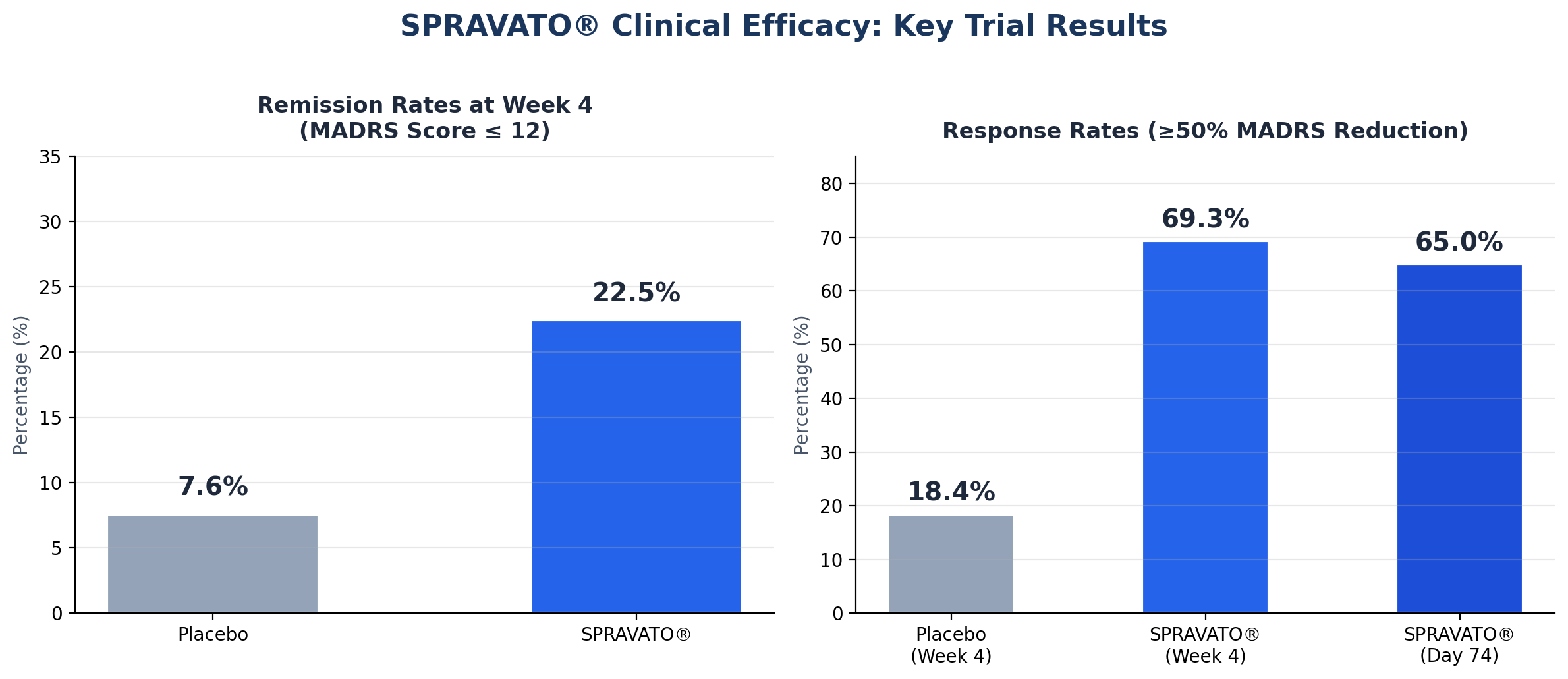
The most recent and arguably most significant change came in January 2025, when the FDA approved Spravato as a standalone monotherapy for TRD. The decision was based on a multicenter, double-blind randomized trial published in JAMA Psychiatry. At the four-week mark, 22.5 percent of patients on Spravato achieved remission, compared to just 7.6 percent on placebo. That is nearly a threefold difference, and it proved that esketamine alone, without any oral antidepressant alongside it, can deliver meaningful results.
What the Clinical Data Really Shows
Numbers matter, so let us look at what the trials actually found. Across the Phase 3 studies, the Montgomery-Asberg Depression Rating Scale (MADRS) was the primary measure. At day 74, 65 percent of patients on esketamine achieved at least a 50 percent reduction in their MADRS score, which is considered a clinically meaningful response. The monotherapy trial results were particularly striking: 22.5 percent remission for Spravato versus 7.6 percent for placebo at four weeks. A separate head-to-head trial published in the New England Journal of Medicine compared esketamine to extended-release quetiapine, an antipsychotic often used off-label for TRD. Patients on esketamine were 1.54 times more likely to respond, and remission rates were 27.7 percent for esketamine versus 17.9 percent for quetiapine. These are not small differences. They represent real people getting their lives back.
Spravato and PTSD: What We Know So Far
Here is where it is important to be clear: Spravato is not FDA-approved specifically for PTSD. Any use for PTSD would be considered off-label, which is a common and entirely legal practice where doctors prescribe a medication based on clinical judgment and emerging evidence. A pilot study published in PMC evaluated 11 patients with both TRD and chronic PTSD who received esketamine, and the results showed significant improvements in both depressive and PTSD symptoms. A broader review in SAGE Journals looked at the entire body of ketamine research for PTSD and found consistent reductions in intrusive symptoms and hyperarousal. A VA case report also documented a veteran whose PHQ-9 scores dropped and suicidal thoughts decreased after starting esketamine.
That said, the 2023 VA/DoD Clinical Practice Guideline for PTSD does not yet address esketamine, and the VA formulary currently covers it only for TRD. Still, many veterans with both conditions are already receiving Spravato through the VA healthcare system, because treating the depression often helps the PTSD symptoms as well.
Why This Matters for Waco, TX
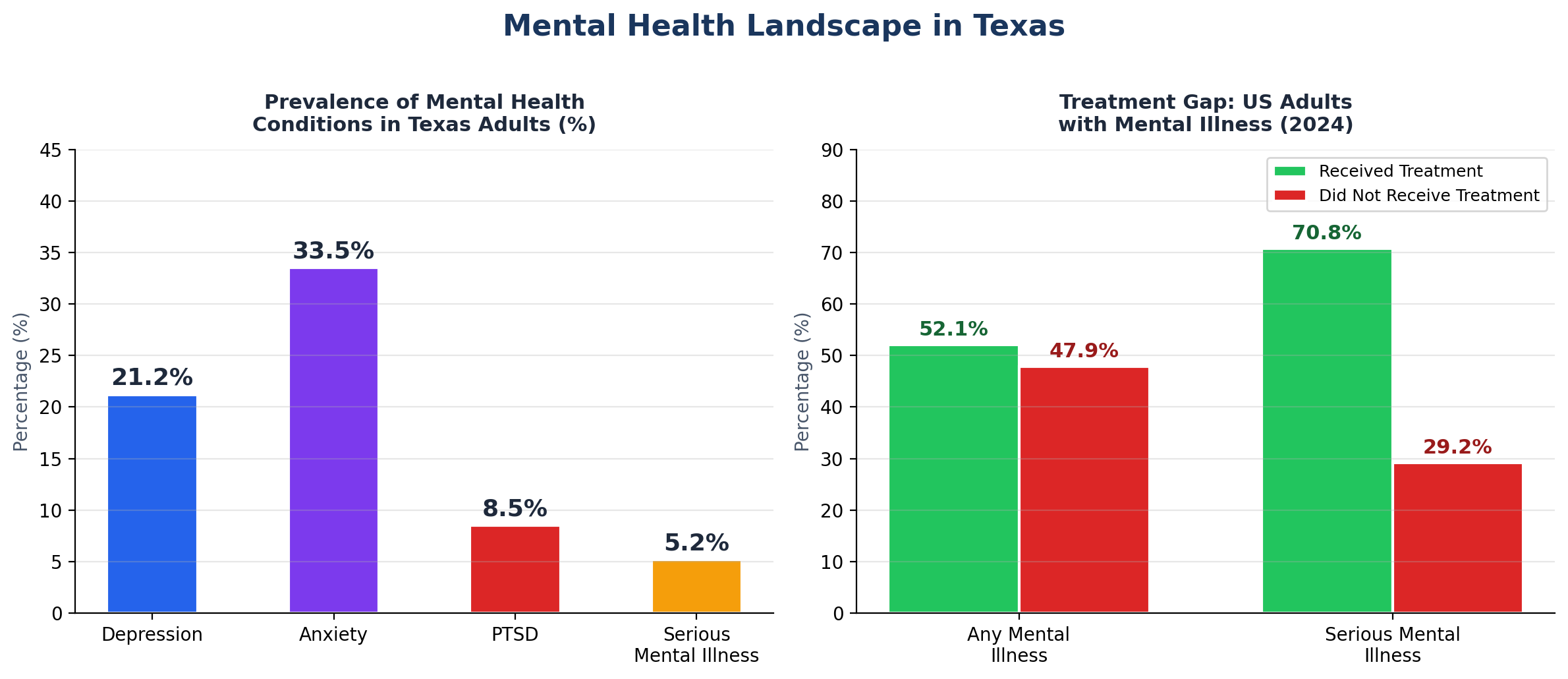
Texas consistently ranks near the bottom nationally for mental health care access, and Waco feels that shortage acutely. About 21.2 percent of Texas adults experience mental illness, and 33.5 percent report symptoms of anxiety or depression. PTSD rates in the Waco area are likely even higher than the estimated 8.5 percent statewide average, given the area's large veteran and first-responder populations. NAMI reports that only 52.1 percent of U.S. adults with mental illness received treatment in 2024, and the gap is even wider in Texas, where many counties are designated Mental Health Professional Shortage Areas.
Local organizations like the Heart of Texas Behavioral Health Network, NAMI-Waco, and the McLennan County Veterans One Stop are working hard to close that gap. But the reality is that many Waco residents still have to travel to Dallas or Austin for specialized treatments like Spravato. The January 2025 monotherapy approval could help change that, since simpler treatment protocols make it easier for local clinics to start offering the therapy.
Getting Started: How to Access Spravato in Waco
Because of its REMS program requirements, Spravato cannot be picked up at a pharmacy or used at home. You must self-administer it at a certified clinic under medical supervision and stay for at least two hours of observation afterward. During that observation window, clinic staff will monitor your blood pressure and check in on how you are feeling. The standard dosing is 84 mg twice a week for the first four weeks, then the frequency typically drops to once weekly or every other week depending on how you respond. You will not be able to drive yourself home after a session due to potential sedation or dissociation, so arranging transportation ahead of time is a must.
The good news is that insurance coverage has improved a lot. Most major commercial plans, Medicare, many Medicaid programs, and the VA now cover Spravato for its approved indications. Janssen, the manufacturer, also offers patient assistance programs for those who qualify. If you are in the Waco area, ask your psychiatrist about whether Spravato is right for you, or reach out to a certified Spravato treatment center to learn more about the process.
Side Effects and Safety: What to Expect
The most common side effects include dissociation, which can feel like being disconnected from your surroundings, along with dizziness, nausea, sedation, and a temporary rise in blood pressure. Most of these resolve within an hour or two. Spravato carries a Boxed Warning for abuse potential, since it is a Schedule III controlled substance, and for increased blood pressure and suicidal thinking in young adults under 25, which is a class-wide warning for all antidepressants. It should not be used by people with certain vascular conditions or uncontrolled hypertension.
Despite these warnings, the overall safety profile is considered manageable when the REMS guidelines are followed. Clinical trials showed low discontinuation rates due to side effects. One real advantage over traditional antidepressants: Spravato has a very low incidence of sexual dysfunction and weight gain, which are two of the most common reasons people stop taking oral antidepressants.
The Bottom Line
For patients in Waco and across Central Texas who have tried everything and nothing has worked, Spravato represents something genuinely different. It works through a mechanism no other approved antidepressant uses, it can start helping within hours instead of weeks, and the latest monotherapy approval makes it simpler than ever to access. The clinical data is strong: nearly triple the remission rate of placebo at four weeks and better outcomes than quetiapine in a head-to-head trial. For veterans and others dealing with both depression and PTSD, the emerging evidence is encouraging even though the PTSD-specific approval is still pending. What makes this moment feel different is that we are not just talking about a new pill with the same old mechanism. Esketamine opens an entirely new pathway in the brain, and for people who have been told that nothing more can be done, that matters enormously.
If you or someone you care about is struggling with treatment-resistant depression or PTSD in the Waco area, talk to a qualified psychiatric provider about whether Spravato might be the right next step. No one should have to settle for feeling stuck when new options are available. If you are in crisis, please call or text 988 to reach the Suicide and Crisis Lifeline.
Disclaimer: This article is for informational purposes only and is not a substitute for professional medical advice. Spravato must be administered under medical supervision. If you are experiencing a mental health crisis, call or text 988 to reach the Suicide & Crisis Lifeline.